

Forgiveness is the hallmark of a Christian way of life. It is when a person shows the very best of what it means to be human — and more than human. Abraham Lincoln once said: “Do I not destroy my enemies when I make them my friends?” He did not overcome his foes through vengeance or bitterness, but transformed them into friends through forgiveness. Forgiveness has that power. It does not erase the past. It transforms it.
Not long before his death, Pope Francis gave a startling speech to the Curia — the Church’s central administrative body. Before a room full of high-ranking officials, he spoke honestly about the hypocrisy, gossip, and careerism that had crept into the Church’s leadership. His words cut deep. The assembled cardinals and bishops were stunned. Yet when he finished, he did something remarkable: he stepped down from the podium, walked across the room, and shook hands with every one of them. His message was not punishment but renewal. He embodied both truth and mercy, correction and gentleness. He was a living parable of Christ’s forgiveness — calling others to reform without rejecting them.
That’s the paradox of forgiveness: it can name the wrong and still love the wrongdoer.
But what happens when the person who hurt you never says: “Sorry.” This is the hard edge of forgiveness where sentiment gives way to struggle. We all know people who say, “I can forgive, but I wont forget.” Yet often what they mean is, “I can’t let go.” The memory becomes a quiet grievance, carried like a stone in the shoe. It weighs one down. To forgive while still nursing a grudge is to build a cage for oneself — a spiritual prison whose steely bars are wrought by resentment.
There’s a difference between condemning a past or present wrong and holding a grudge. To remember a wrong is to learn, but to hold a grudge is to relive. Forgiveness doesn’t demand amnesia, it asks for transformation — to let the wound become wisdom instead of a weapon. When Jesus taught His followers to pray, “Forgive us our trespasses as we forgive those who trespass against us,” He placed forgiveness at the heart of every believer’s relationship with God. To forgive is to free yourself to receive God’s love.
When we cling to injury, we remain trapped in the very pain we despise. But when we forgive, we step out of that circle of hurt and into the light. Forgiveness does not excuse evil. It says, “You no longer control my peace.” The greatest gift of forgiveness is not what it gives to the other person, but what it gives to us — freedom. Freedom from bitterness, freedom from mental replay, freedom from becoming what we hate. The Christian experience is full of people who changed at the last moment: The thief on the cross, forgiven in his dying breath, John Newton, the slave trader who wrote Amazing Grace, turning from cruelty to compassion. Some repent early, some late, but all are offered the same mercy from an All-Forgiving God. To believe that others are beyond redemption is like believing that we ourselves are without sin. Perhaps the very person who never apologized to you is struggling silently, ashamed, or unable to face what he or she did. We don’t know the storms that are battering another’s heart.
Forgiveness breaks the messy cycle of resentment. You cannot solve a problem using the same means that caused it. You cannot heal resentment by resentment. You can only heal it by its opposite: forgiveness When we forgive, even without an apology, we participate in something divine. We echo the words of Jesus on the cross: “Father, forgive them, for they know not what they do.” Those words still change hearts, still soften souls — starting with our own.
Forgive then not to erase the past, but to enjoy the boundless freedom of the children of God.
—Fr. Hugh Duffy, Ph.D.





8 Comments
Nora Kosegarten
Thank you!🙏🏻
Ross
Amen!🙏🏻
Jeff Hammond
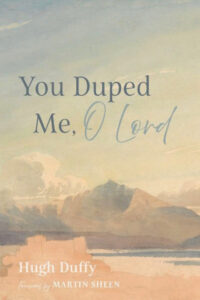
Fr Duffy – Thank you for your sage and enduring words. Just finished your book, “You Duped Me, Oh Lord” and all should find the time to read such fine work.
Bartholomew Okere
Fr. Duffy, you catechized on the topic too hard to practice. Forgiveness when there’s no Apology capped the issues at stake. You and I must’ve acted on your reflection w/out looking back as God’s chosen people. St. Francis of Assisi’s peace prayer in lyrics speaks volume to your reflection. The world lives on the phrase, I can forgive, but won’t forget. Thanx for your thoughtful reflection.
Brian J McShane
Fr. Hugh,
Great, as always Fr. Hugh! God has blessed you abundantly.
Brian J. McShane
Christine Stokes
❤️
Tom Walsh
Only getting to read and reply to you now Fr. Hugh. Thank you for taking the time, I believe, to help soften the hearts of those of us who may be finding it difficult to forgive someone or multiples of people in our lives, whom we feel have or still are hurting us. Reflecting and acting upon your sharing, I believe we can benefit from it. Amen. Tom.
Hugh Duffy
Thanks for all your comments about this week’s blog on forgiveness when there’s no apology. The world cries out for apology, justice, closure, and even vengeance, but if you fight fire with fire you get a scorched earth. The best way is forgiveness. It liberates both the wrong-doer and the wronged.