

Last Tuesday, I watched a young father at a grocery store count his change twice, then walk back to the cashier. “You gave me ten dollars too much,” he said quietly, while his six-year-old daughter looked on. The tired cashier’s eyes widened with relief. “Thank you,” she whispered. “That would have come out of my paycheck.” Ten dollars. Not a fortune, but perhaps the difference between that cashier making rent or not. And for that little girl? She learned something worth far more than money could buy. She witnessed personal integrity in action.
Personal integrity—that unwavering commitment to doing right even when no one’s watching—is the bedrock upon which both family and society rest. Without it, everything crumbles. But lo and behold, we’re watching it crumble all around us. People can lose their integrity when those who lead them have lost theirs. When leaders lie, people often feel they can lie. When institutions deceive, deception becomes normalized. Like a poison that flows downward, it contaminates everything it touches.
I think of George Washington, who could have been king but chose to step down—a man renowned for honesty that even the cherry tree story, likely apocryphal, rings true to his character. He was like a rock, unmovable in his principles. His integrity earned him respect that no title could bestow. Today, we have leaders who demand respect through position while earning none through character. We see it everywhere: politicians who promise what they never intend to deliver, CEOs who cook the books while preaching corporate values, and yes, even religious leaders who preach virtue while practicing vice.
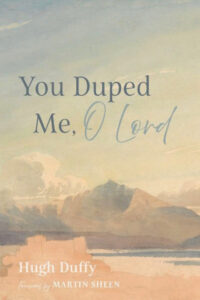
In 2023, a Vatican Cardinal was indicted for financial crimes. A Cardinal! When those who claim to speak for God Himself lack integrity, is it any wonder that people’s faith—not just in the Church, but in all institutions would be shaken? In my latest book, You Duped Me, O Lord, I confronted one of the most painful experiences of my life: discovering that the institution I served had turned away, in many instances, from its own mission to follow Christ. The very institution entrusted with the highest calling to follow Christ had, in too many instances, chosen institutional survival over integrity.
Standing up for integrity in today’s society takes courage that might feel almost countercultural. You’ll be called naive or foolishly idealistic. But here’s what I know: every time we choose the comfortable lie over the uncomfortable truth, we die a little inside. We become less human, less the image of God we were created to be.
Let’s face it. It is challenging to practice integrity in today’s society. Turn on your television, scroll through your phone, walk down any city street—you’re bombarded with lies dressed as truth. Advertising sells us images of lives that don’t exist, promises of happiness through products that can’t deliver. We’re shown flawless faces that have never existed outside of photo editing software, lifestyles funded by debt portrayed as success, and relationships as shallow as the screens they appear on. This culture of falsity isn’t just about selling products; it’s about selling a worldview where image matters more than substance, where profit trumps integrity, where what benefits the bottom line becomes the only compass. We’ve created a world where the question isn’t “Is it true?” but “Will it sell?” Not “Is it right?” but “Can I get away with it?”
But here’s the bright side: integrity can be taught. More than that, it must be taught. And it begins where all the most important lessons begin—in the home, through the example of parents like the father in the grocery store. That father at the grocery store didn’t just return ten dollars; he planted a seed in his daughter’s heart. Every time promises are kept to children, every time mistakes are acknowledged, every time truth trumps convenience, integrity flourishes. Families that cherish real principles lived out in daily decisions—these families become small centers of resistance against the culture of deception. When children see parents returning extra change, admitting faults to each other, keeping commitments even when inconvenient, they learn that integrity is a way of life. Our dear Lord didn’t just teach integrity. He lived it. When tempted with all the kingdoms of the world, He chose a life of integrity, a life in service to others. Even the self-serving Pilate, had to admit: “I find no fault in this man.”
So, I return to that Tuesday afternoon at the grocery store. What would you do if the cashier gave you too much change? Your answer will reveal, not just your honesty, but your understanding of what holds civilization together. Because here’s the truth: society doesn’t collapse from great catastrophes nearly as often as it rots from small compromises. Each lie told, each corner cut, each blind eye turned—these are the termites that hollow out the structure until one day, it all comes crashing down. But each truth told, each promise kept, each moment of choosing right over wrong—these are the acts that build, not just our society, but our very souls.
That little girl watching her father return the money to the cashier might grow up to be a CEO who refuses to cook the books, a politician who keeps campaign promises, a teacher who admits when she doesn’t know something, a mother who shows her own children that integrity isn’t optional for a life well-lived—it’s the engine itself.
Choose integrity. Because in a world drowning in deception, truth-tellers aren’t just helpful—they’re heroic.
—Fr. Hugh Duffy, Ph.D.







9 Comments
Steve Batalden
Thank you, Father Duffy.
Steve Batalden
stephen.batalden@asu.edu
Barry Fraser
Only a man who has lived it so courageously could express this important lesson for the human race so beautifully. Thank you for your clarity Fr. Hugh , I look forward to reading your book. Barry F.
Henry Virkler
Although we’re not walking right now until your leg heals, I still read and treasure your weekly emails.
Paulette Leonard
I wish everyone in our country could/ would read and heed your message. Personal values and facing accountability build character, something scarce in our leaders today.
Thank you for bringing this to the surface.
Paulette Leonard
Gary Clarke
Outstanding blog which I believe addresses the most important core issues of our society. If we as a nation could magically transform and absorb these lessons we would be a better society. Thanks for sharing and giving us this opportunity.
Tom Rooney
Good job father Hugh
Tom Blair
Thank you …….It was good to read
Tom Walsh
Unfortunately I am not as optimistic as you are Fr. Hugh that children even taught integrity at home will live by it. I could be wrong. It seems now in the society that I live in, telling lies is an acceptable way of life. Its Ok to tell lies and when I challenge someone about an answer they give as to why they did something, which I believe is a lie, they are reply with ” I dont know “.
Hugh Duffy
Yes, Tom, a survey done in the 1970s in America discovered the reason people lie is that they don’t know they’re lying. That’s too bad, and it may be due to societal pressure to survive in a compromised world. But, we’re called to a higher standard if we call ourselves Christian.