

Have you ever watched a child completely absorbed in nature, oblivious to yesterday’s troubles or tomorrow’s anxious tasks? There’s something radically spiritual in that innocent focus. Living in the present moment isn’t just the fleeting tick of the clock. It is where life actually happens, where God meets us like morning light breaking through darkness.
Consider this. The past exists only in memory. The future, despite our careful plans, remains an unopened book. But the present—ah, the present—this is holy ground. This is where God revealed Himself in the burning bush. This is where Christ declared, “I AM”—not “I was” or “I will be,” but the eternal, ever-present “I AM.” Scripture reminds us repeatedly of this truth: “Do not worry about tomorrow, for tomorrow will take care of itself. Each day has enough trouble of its own” (Matthew 6:34). Jesus wasn’t suggesting we become careless or unprepared, but rather that we recognize that real life unfolds—in the present, irreplaceable now.
Step outside into nature and observe creation’s masterclass unfolding in the present, living moment. The little squirrel at your feeder doesn’t fret about last winter’s storms or next season’s migration. The oak tree doesn’t lament its lost leaves or anxiously await spring’s renewal. They simply are—fully present, fully alive, fully expressing the Creator’s design in this very instant. When we pause to truly see the world around us, wonder floods our hearts like sunlight through stained glass. That butterfly dancing among the flowers, those clouds painting abstract art across the sky, the intricate pattern of frost on windowpane—these are signs from an unseen God, written fresh each moment, waiting only for us to read them with present-tense eyes.
But how do we, with our buzzing phones and racing thoughts, learn to dwell in the present? Like any spiritual discipline, it requires both intention and practice: Begin each morning, not with a scroll through social media, but with simple gratitude, thanking the Lord for our daily breath, for our beating hearts, for the comfort of warm blankets, a roof overhead, and for the promise of a new day. Gratitude is like a rope that tethers our wandering minds to the grace of the present moment. No need to do great things. Just do little things with love. When your spouse speaks, put down your phone. When your child shows you a drawing, really look at it. When you eat your breakfast, lunch, or dinner, really taste and enjoy them. These small acts of presence are prayers without words, offerings of awareness on the altar of now.
Surround yourself with people who elevate rather than drain, who inspire rather than discourage. Just as plants lean toward light, we naturally orient ourselves toward those who help us grow. This isn’t selfishness. It is stewardship of the emotional and spiritual energy God has entrusted to us. Let’s be honest, toxic news drains us, often disconnecting us from the very life happening right before our eyes. How many sunsets have we missed while staring at gray screens? How many conversations have we half-heard while scrolling through other people’s highlight reels? Although the apostle, Paul, never knew the temptation of smartphones or computers, he understood the importance of being present always to “whatever is noble, whatever is right, whatever is pure, whatever is lovely, whatever is admirable” (Philippians 4:8). The present moment, when truly inhabited, offers riches in abundance.
In our noise-saturated culture, silence has become a rare treasure. Yet it’s in solitude that we often find our truest sense of presence. Jesus himself regularly withdrew to lonely places, modeling for us the necessity of stepping away from the crowd’s clamor to hear heaven’s whisper. Create a daily appointment with quietness. It might be five minutes before the family wakes, a lunchtime walk, or evening moments on the porch. Let Scripture be your companion in these times—not for frantic study, but for slow, meditative pondering. Let God’s word marinate in your heart like herbs steeping in oil, releasing their essence gradually, powerfully. A humble monastery cook, brother Lawrence, discovered that he could practice the presence of God as easily among his pots and pans as in a cathedral. This is the grace of the present moment—it transforms ordinary time into sacred space, mundane tasks into acts of worship.
So here’s the challenge today—not tomorrow, not after you’ve got everything figured out, but today: Practice Presence. When worry knocks at your door, gently escort it out of your mind with a prayer. When regret tries to replay its worn-out recordings, change the channel to gratitude. When your mind races ahead to next week’s problems, call it back like a wandering sheep into the green pastures of the present. The present is the only moment we’re guaranteed, the only time when love becomes real, where God’s kingdom breaks through into our everyday lives.
In the words of the psalmist, let’s pray:
“This is the day the Lord has made; let us rejoice and be glad in it” (Psalm 118:24).
—Fr. Hugh Duffy, Ph.D.





3 Comments
Kate Walsh-Soucheray
This is such a beautiful reminder to pay attention to today and not to be so consumed with concerns about the future.
My mom used to say “Today is a gift and that’s why they call it the present.”
Thank you, Fathet Duffy for this wonderful reminder!
God bless, Kate
Hugh Duffy
Your mother put it beautifully, Kate.
Bartholomew Okere
Fr. Duffy, a well articulated treatise and discourse on
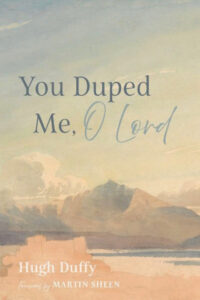
Living in the Moment.A freelance writer once wrote- forget the past, don’t think of the future, but concentrate in the present. Your reflection sounds like your memoir, “You duped me Lord”To practice presence may sound mythical due to the noisy culture we found ourselves.The toxic news you pointed out has remained a cancer in our society.