

Picture this: A man stands atop a gleaming skyscraper, surveying his empire. Bank accounts overflow, luxury cars fill his garage, and the world knows his name. Yet as the sun sets over his achievements, an emptiness gnaws at his soul. Sound familiar? It should—because this is the hollow victory that our culture calls “success.”
We live in a world that measures worth by wealth, significance by status, and achievement by accumulation. But after pursuing every pleasure and amassing unprecedented riches, King Solomon, the wealthiest man of his time, concluded that material success was like chasing the wind.
Jesus himself posed the penetrating question: “For what does it profit a man to gain the whole world and loose his soul?” (Mark 8:36). These words aren’t merely religious platitudes; they’re profound observations about human nature. The temporary high of a promotion, the fleeting satisfaction of a purchase, the brief validation of recognition—these fade faster than morning mist, leaving us searching for something more substantial.
Here’s where the gospel turns conventional wisdom on its head. Jesus taught that the first shall be last, the greatest shall be the servant, and those who lose their lives shall find them. This is revolutionary: Mother Teresa, owned nothing but two saris, yet was welcomed by world leaders. Dietrich Bonhoeffer, gave up a comfortable academic career to stand against Nazi tyranny, ultimately sacrificing his life. Dr. Livingston abandoned a comfortable lifestyle to work among the poor of Africa. Tolstoy sold all he had, and gave it to poor peasants in Russia. Were these people failures? By worldly standards, perhaps. But their legacies endure while corporate titans fade into obscurity.
The true vision of success is inherently relational. We weren’t created to climb ladders alone but to build together. St. Paul compared the community to a body, where every part needs the others (1 Corinthians 12). When the eye says to the hand, “I don’t need you,” the whole body suffers. True success means lifting others as we rise, creating value that enriches communities, and measuring our achievements by the flourishing of those around us. St. Augustine observed: we’re made for relationship—with God and with others. Any “success” that isolates us from these connections is ultimately self-defeating. C.S. Lewis captured this beautifully when he wrote about pride being the “complete anti-God state of mind.” The proud person competes with everyone, finding satisfaction only in having more than others. But the person who serves discovers a joy that competition can never provide.
So what does real success look like in practice? In business, it can be creating enterprises that serve genuine needs, treating employees with dignity, and contributing to community growth. In personal relationships, it is putting people over projects, wisdom over wealth, and measuring success by lives touched rather than ladders climbed. The liberating truth is that when we stop chasing the world’s notion of success, we’re free to pursue something far more satisfying. When we cease comparing ourselves to others, we can celebrate their victories without envy, and see our talents differently as gifts to be shared rather than tools for self-promotion. In this way, work becomes worship.
The rich young ruler walked away from Jesus because he couldn’t imagine success without his possessions (Matthew 19:16-22). But those who have discovered true success testify to a joy that material success alone never provided.
In a world obsessed with personal brands and platform building, the gospel vision of success offers a radical alternative: life poured out for others, achievements measured in love, and a legacy written, not in stone monuments, but in transformed hearts.
The question isn’t whether you’ll be successful—it’s which notion of success you’ll pursue. What do you think? Leave a comment.
—Fr. Hugh Duffy, Ph.D.






12 Comments
J. Brian Woolsey
Hey Duff, Leaving a comment sings in the silence of the scripted world of success. God Bless all that can hear the song dancing on the breath of Life – Allowing the songs of the father to be embraced.
God Bless you ,Did you hear that?
Brian W
Hugh Duffy
Yes, I hear you Brian. Your comment reminds me of the song: The Sounds of Silence by Simon and Garfunkel. The message about success in my blog is drowned out by the prevailing notion of worldly success. Too bad.
jim brady
Father, keep me in your prayers, you are in mine . Jim
Hugh Duffy
I sure will remember you in my prayers, Jim.
Bartholomew Okere
Fr. Duffy, your discourse cum catechesis on “What is Success” resonate with me in my ministry. Have seen people of all ages, status and fame lament on what seems to be their successes vanished in a twinkling of an eye. Bcos, as you quoted, we’re not created to be alone but in relationships. A good lesson for all to emulate. Continue your propagation of truth and good life. Thx
Hugh Duffy
Thanks, Bartholomew. You personal experience and comment about the transience of material wealth is much appreciated.
darrell
So clearly put and such an important reminder. The things of this world fade so quickly, but the love of Christ, the relationships we build, and the compassion we show are what truly last. Thank you for pointing us back to what really matters.
Hugh Duffy
Thanks, Darrell. How easily we are deluded in life by the lure of riches.
Vincent Lloyd
Years years of pI loved you essay on success and materialism,it really struck a chord with me. Especially after fifty years of practicing law. I often found myself engaged in thoughts like when does the new model Mercedes become available. Congratulations on the publication of your recent book!! Regards Vincent
Hugh Duffy
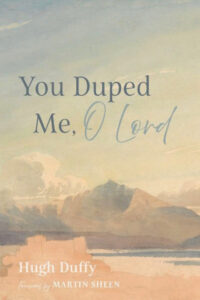
Thanks, Vincent, for having the courage to question the pursuit of material trappings after fifty years of practicing law. With age comes wisdom and insight. My memoir, which you allude to, deals with the struggle to remain faithful to simple gospel values within a flawed institution. Everybody who values freedom and conscience, I feel, has to deal with this challenge: to be true to oneself.
Don
Excellent blog. Thank you. I came to it after finding a book by a Hugh Duffy that was his doctoral thesis published in 1989 and starting looking for the author to see if I could return it or pass it onto someone. Apologies for getting off topic.
Don
Hugh Duffy
Yes, Don, I wrote the book you reference. It is my Ph. D. Thesis which I published in 2004, and it is titled: Queen of the Sciences. If you wish to return it to me, I’d be very grateful.
I’m glad you liked my blog.